



Life jackets and rescue equipment – what must be on board
Safety on a motorboat starts with proper life-saving equipment. According to regulations, every vessel must carry life jackets or buoyancy aids for all people on board, including adults and children in the correct sizes.
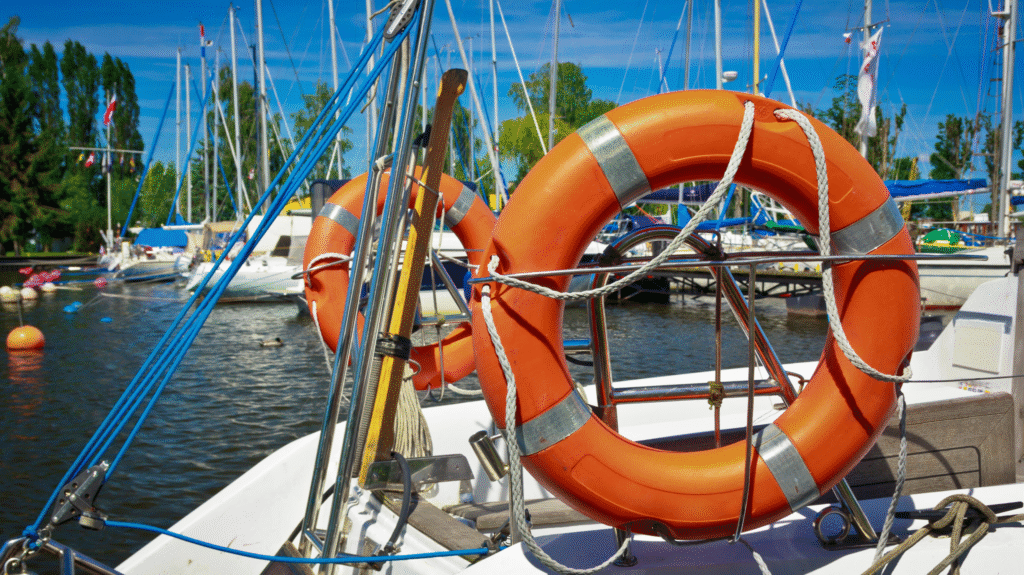
Life jackets differ from buoyancy aids in that they are designed to keep the head, mouth, and nose above the water and must meet official safety certifications. A mandatory item is also a lifebuoy equipped with a floating line 8-11 mm in diameter and at least 30 meters long. At least one lifebuoy should have a self-igniting light for night navigation.
All life-saving equipment should be stored in visible and easily accessible places so it can be used quickly in an emergency. Safety on a motorboat also requires a boat hook and a sufficient number of fenders appropriate to the size of the vessel. A first aid kit is equally important and should include dressings, disinfectants, a thermal blanket, and a rescue breathing mask.
Fire extinguishers and fire protection systems
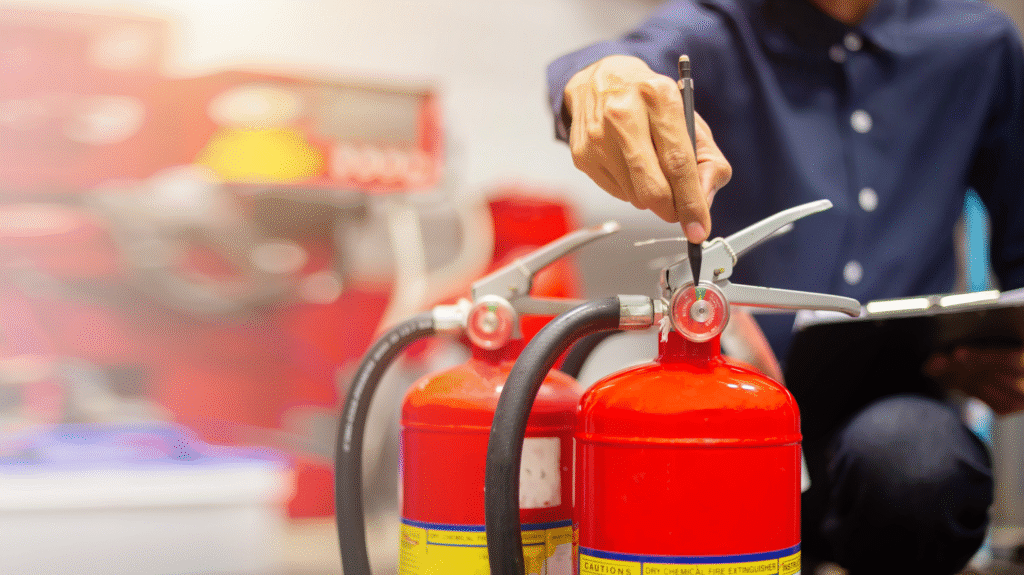
Fire safety on a motorboat is strictly regulated. Every motorboat and all vessels longer than 3.5 meters must be equipped with powder fire extinguishers with a minimum filling weight of 2 kg.
The required number of extinguishers depends on hull length and engine power. Boats up to 10 meters must carry one extinguisher, with additional units required depending on engine power. Vessels with engines rated at 50-100 kW require one extra extinguisher, and those above 100 kW require another one. Boats 10-15 meters long must carry at least two extinguishers, while vessels over 15 meters require three basic extinguishers plus additional ones based on engine power.
Fire extinguishers should be evenly distributed in visible and easily accessible locations: near companionways, no more than 1 meter from the helm station, and within 2 meters of the galley. Water or foam extinguishers may be used if they are suitable for the most likely fire class on board. All extinguishers must be regularly inspected and kept in full working condition.
Emergency signaling and lighting
Safety on a motorboat also depends on effective signaling in emergency situations. Every vessel should be equipped with sound signaling devices, such as a whistle or horn, to attract the attention of other water users. Visual signaling equipment includes flares or parachute rockets, which must be red, as this color is internationally recognized as a distress signal.
For night navigation, a waterproof flashlight is essential, as well as a lifebuoy light that continues to operate in the water. Larger vessels, especially those operating in areas where waves can reach 2 meters, are required to carry a life raft with a canopy and an automatic inflation system.
Proper placement of signaling equipment in easily accessible locations can be critical for a fast response in an emergency. Safety on a motorboat also requires regular checks of flare expiration dates and the condition of all lighting devices.
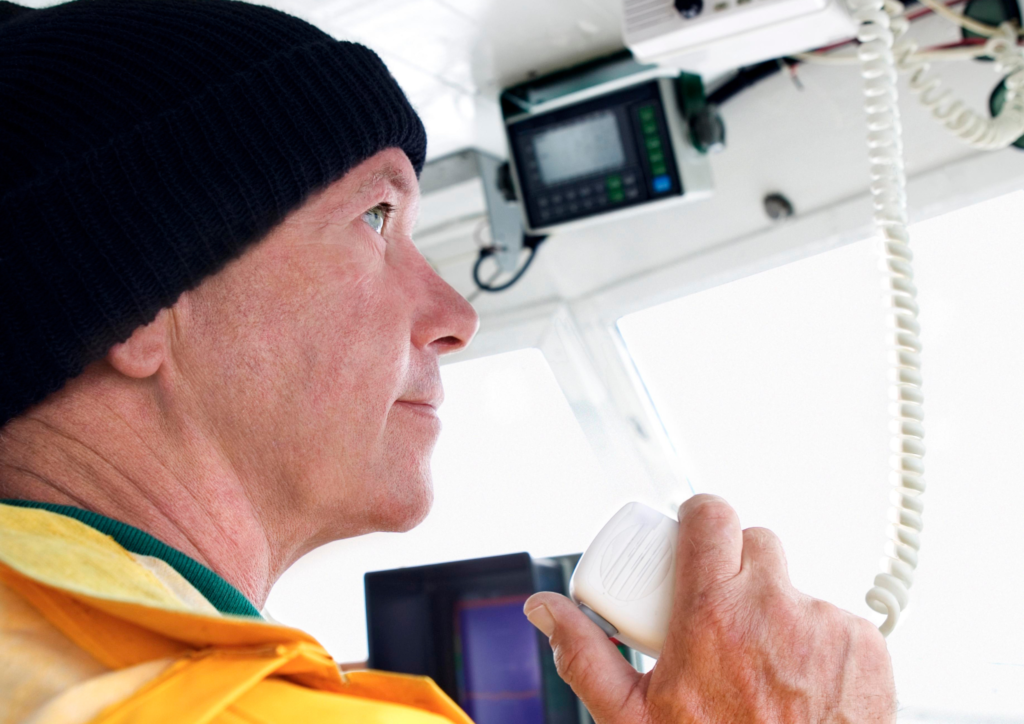
Every skipper should know the procedures for calling for help
Tools and equipment for emergency communication
Safety on a motorboat is closely linked to effective communication. A VHF radio is a basic piece of equipment, especially important when navigating more than 2 nautical miles from the shore, as it allows communication with other vessels and shore-based rescue services. Vessels longer than 20 meters are required to carry a VHF radio, while smaller boats should be equipped with other radio communication devices or a satellite phone.
For personal watercraft, an emergency engine cut-off lanyard (kill cord) is mandatory, as it automatically stops the engine if the operator moves away from the controls. Investing in a GPS or other navigation devices is also recommended, as they help determine the vessel’s exact position in an emergency.
Every skipper should know how to call for help by radio and be familiar with the emergency numbers applicable in the given area. Regularly checking communication equipment and knowing how to use it are essential elements of responsible boating. Remember, safety on a motorboat depends not only on having the right equipment, but above all on the ability to use it correctly in critical situations.