



The history of motorboats is a fascinating story of human creativity, engineering innovation, and a passion for life on the water. From the first experimental boats powered by combustion engines to today’s fast yachts and personal watercraft, the development of motorboats combines technology, design, and a true spirit of adventure.
Pioneer solutions and combustion engines
The beginnings of motorboat history are closely linked to the invention of the combustion engine. As early as 1865, Étienne Lenoir built the first boat powered by a two-stroke engine, opening a new chapter in water transport. In the following years, inventors such as Nikolaus Otto and Gottlieb Daimler developed four-stroke, gasoline, and diesel engines, which further accelerated progress.
By the 1890s, boats with combustion engines began to appear in Norway and the United States, mainly as motor launches and fishing boats. These early designs increased speed, range, and independence from wind, laying the foundations for modern powerboating and water sports. The history of motorboats clearly shows how quickly automotive engine technology found its way onto the water, while hull and propulsion development shaped each new stage of this evolution.
New materials and streamlined shapes
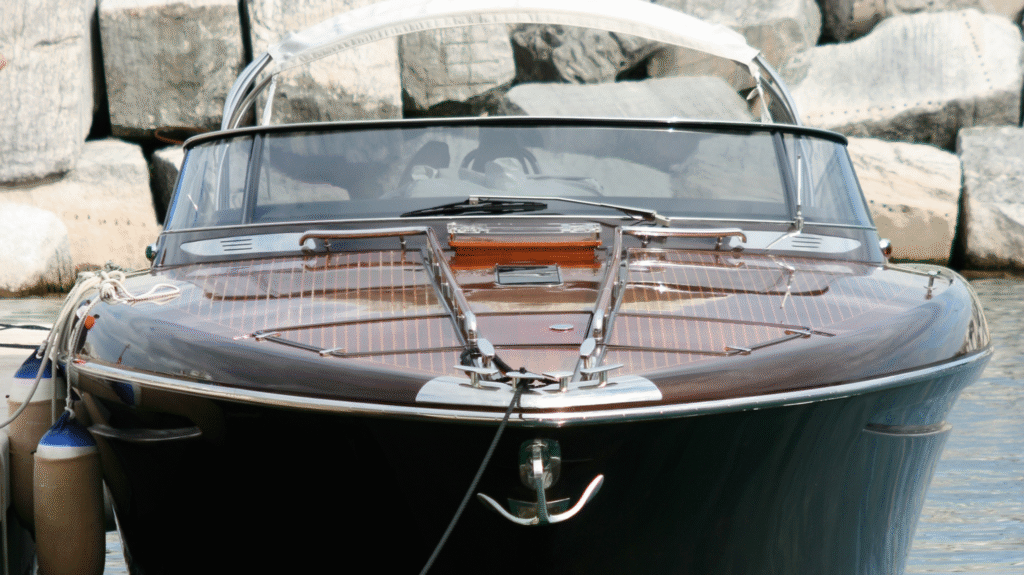
Another major milestone in motorboat history was the introduction of modern materials and advanced hull shapes. Traditional wood and steel were gradually replaced by aluminum and composite materials such as fiberglass and carbon fiber. These materials significantly reduced weight without sacrificing strength, making boats faster, more efficient, and easier to handle.
At the same time, hydrodynamics developed rapidly. V-shaped hulls and planing designs reduced water resistance, allowing higher speeds with the same engine power. Streamlined superstructures and bows also reduced air resistance, which became especially important at higher speeds. Better weight distribution improved stability and comfort in rough conditions. The combination of lightweight construction with aerodynamic and hydrodynamic forms became the foundation of today’s high-performance motorboats.
Key innovations of the 20th century
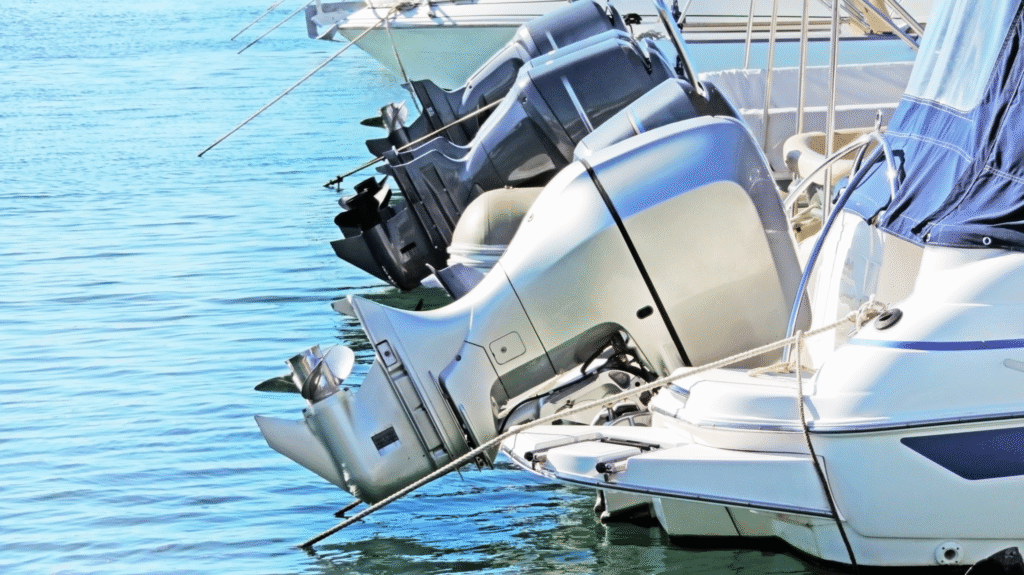
The 20th century was a breakthrough period for marine propulsion. As boat power and speed increased, engineers began designing engines specifically for marine use, rather than adapting car engines. Inboard and sterndrive engines had to operate under constant heavy load and at higher RPMs, which required changes to timing, lubrication, and cooling systems.
Corrosion resistance became critical, especially in saltwater environments. As a result, stainless materials, protective coatings, sacrificial anodes, and advanced anti-corrosion systems were introduced. Lubrication systems were also improved to ensure reliable engine operation during pitching and rolling. The late 20th century saw the rise of powerful V8 engines, followed by lighter and more efficient aluminum engines with modern fuel injection. These innovations created the foundation for today’s marine engines, combining performance with durability and reliability.
Modern motorboats as smart vessels
Current trends and future directions
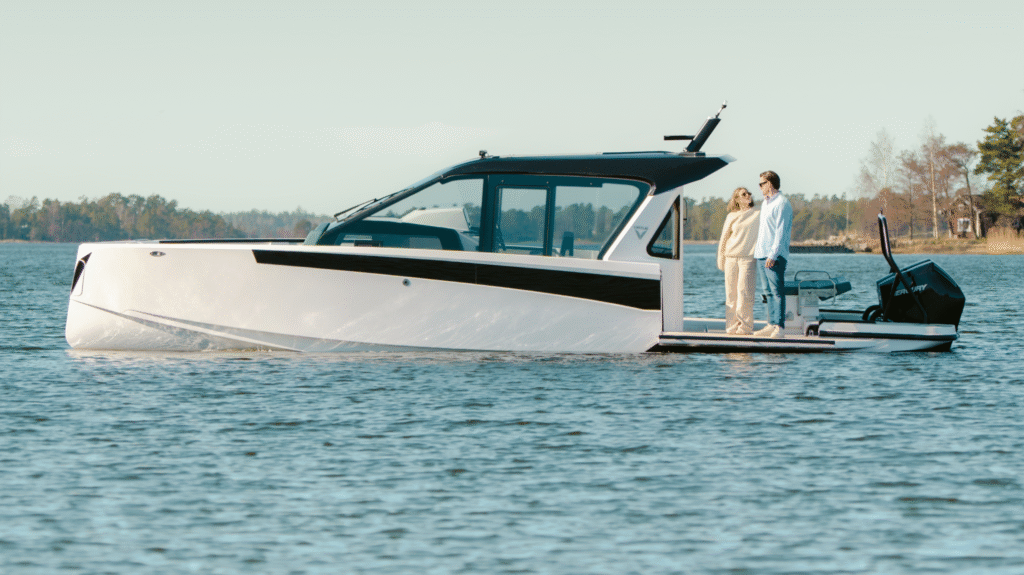
Today, the history of motorboats is entering a new phase driven by electrification, digitalization, and sustainability. Hybrid and fully electric propulsion systems are becoming increasingly popular, offering quiet operation, lower emissions, and access to environmentally protected waters.
At the same time, smart technologies are transforming boating. Advanced GPS systems, AIS, autopilots, and mobile app integration greatly improve safety and navigation accuracy. Modern motorboats are becoming “smart vessels” that can be monitored and managed remotely, with real-time access to technical data and energy status.
Environmental responsibility is also a key focus, with solar panels, modern batteries, and eco-friendly composite materials gaining importance. Increased automation goes hand in hand with greater comfort, from digitally controlled onboard systems to ergonomic, modular interiors. Designers are also responding to the expectations of younger users, who value flexibility, personalization, and a close connection to nature without giving up technology. Looking at these trends, the history of motorboats clearly points toward a future that is smarter, safer, and more environmentally friendly.